

Built only for locums. Engineered for faster fills.
- Ranked, explained shortlists the moment an order lands
- Live fill probability and the constraint holding each order back
- Stalled placements and fall-off risk surfaced early
- Locums-native stages, rate structures and included portals

Platform coverage
One system of record, desk to invoice
Purpose-built for locum tenens firms — no custom objects to invent, no consultants, no spreadsheet handoffs between teams.
Instant ranked shortlists
New coverage request, scored book: who qualifies, who can be credentialed inside the window, who has covered that site before — with the reasoning shown.
Fill probability
Every order carries a live likelihood of filling on time and the one constraint holding it back, so leadership sees risk before the client does.
Next best action
Each desk opens a prioritized queue of the calls, presentations and follow-ups most likely to convert today.
Placement pipeline
Presented, name clear, offer, credentialing and confirmed — with stalls surfaced and fall-off reasons captured instead of lost.
Credentialing without chasing
Client-specific checklists, expiration alerts and packet status the facility can see — the step that usually decides your time-to-fill.
Scheduling and coverage
Shift-level calendars including call and beeper coverage, plus provider-submitted timesheets and client approval.
Travel tied to margin
Flights, lodging and cars attached to the assignment, with cost posted against the margin on that placement.
Insight on demand
Ask why fills slowed, which clients erode margin and where conversion drops — answered from your own live data.
See it in action
Where the work actually happens
Pipeline, dashboard, job orders, timesheets and reporting — the day-to-day surfaces your recruiters, coordinators and approvers spend their time in.
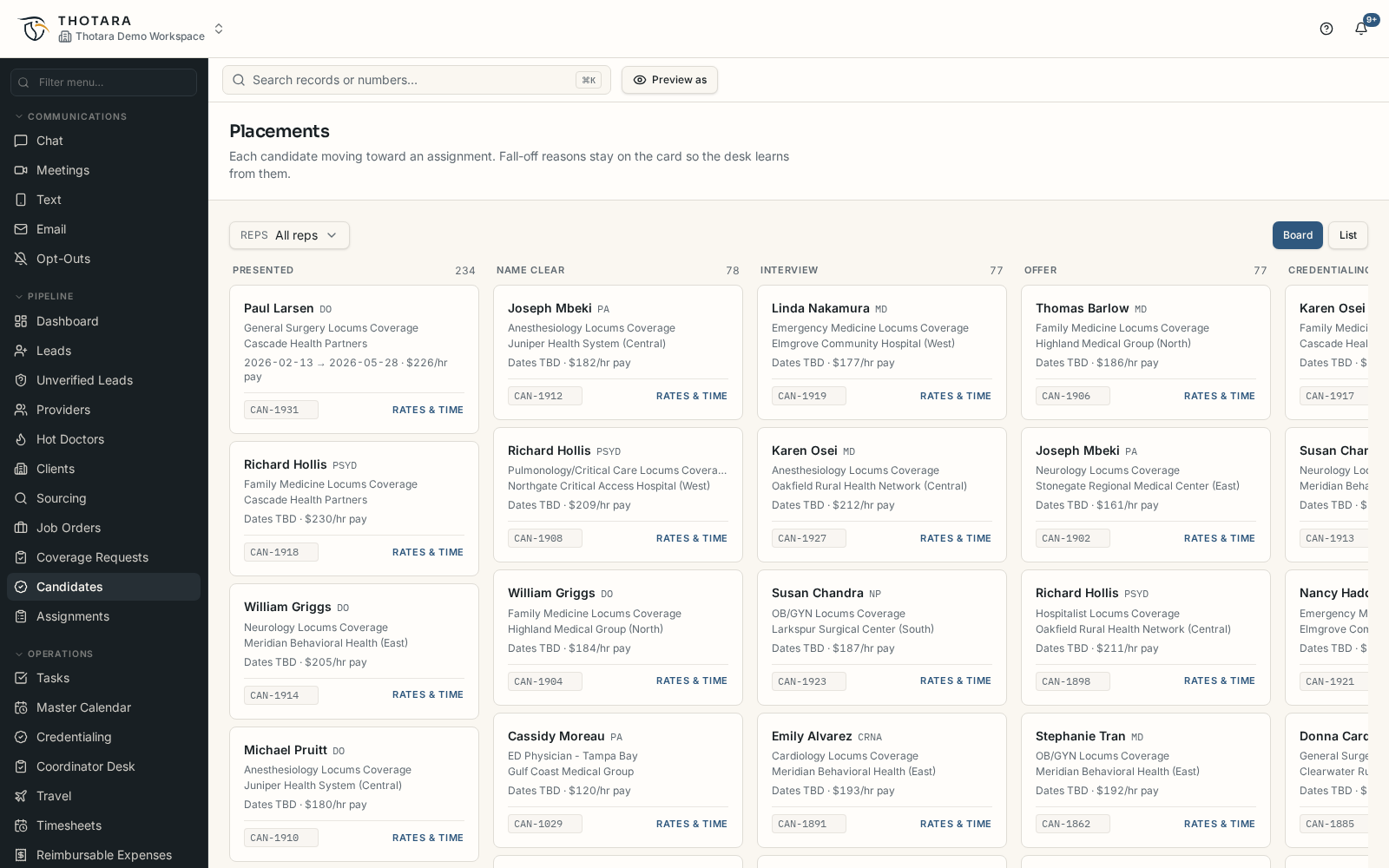
Placement pipeline
Every candidate, every stage, one board
Presented, name clear, interview, offer and credentialing — each card carries the provider, the job, the rate and the candidate number. Stalls and fall-off reasons are visible the day they happen, not the week they're noticed.
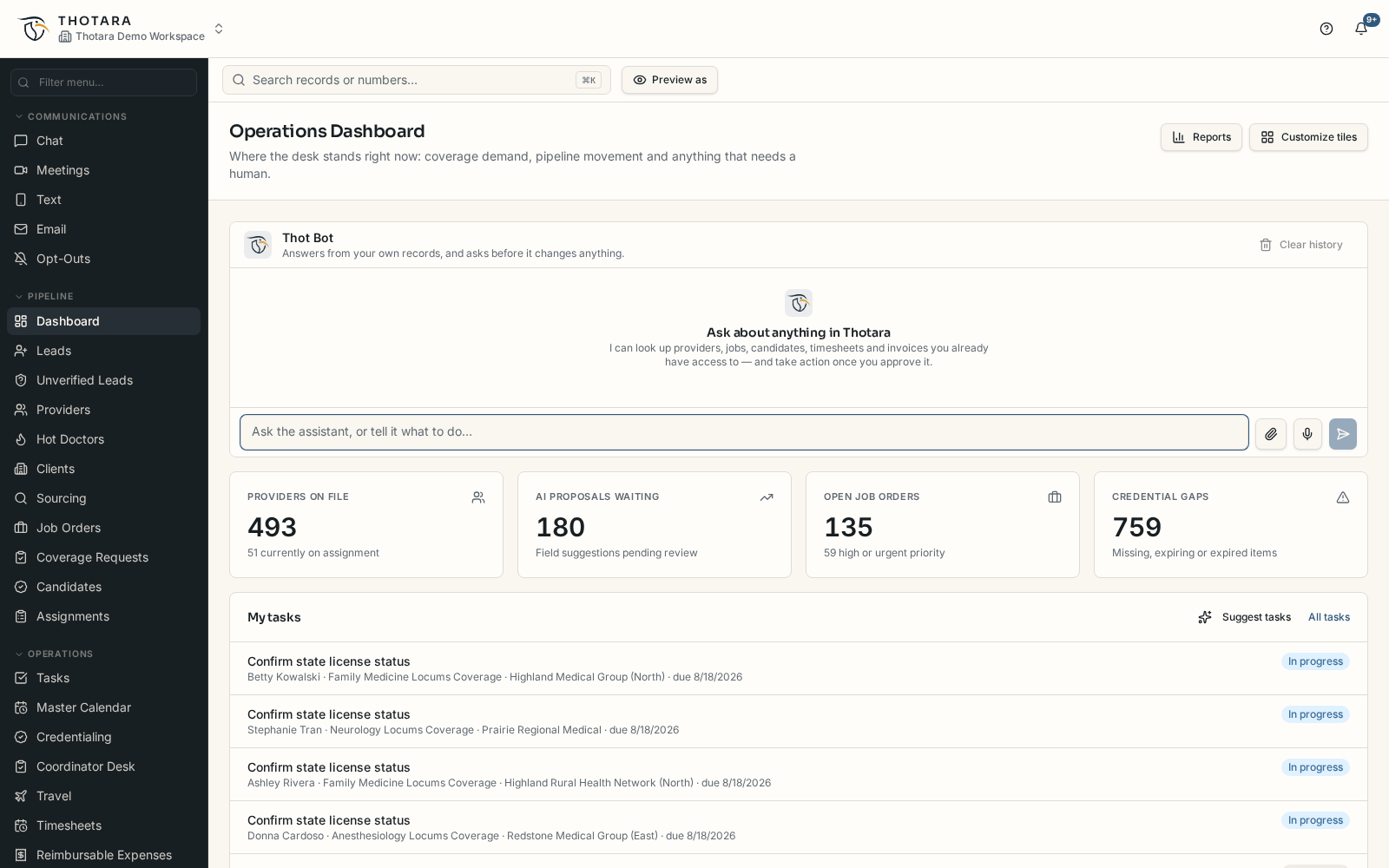
Operations dashboard
The desk, the moment you sign in
Providers on file, open job orders, credential gaps and AI proposals waiting for review — plus Thot Bot, which answers from your own records and asks before it changes anything.
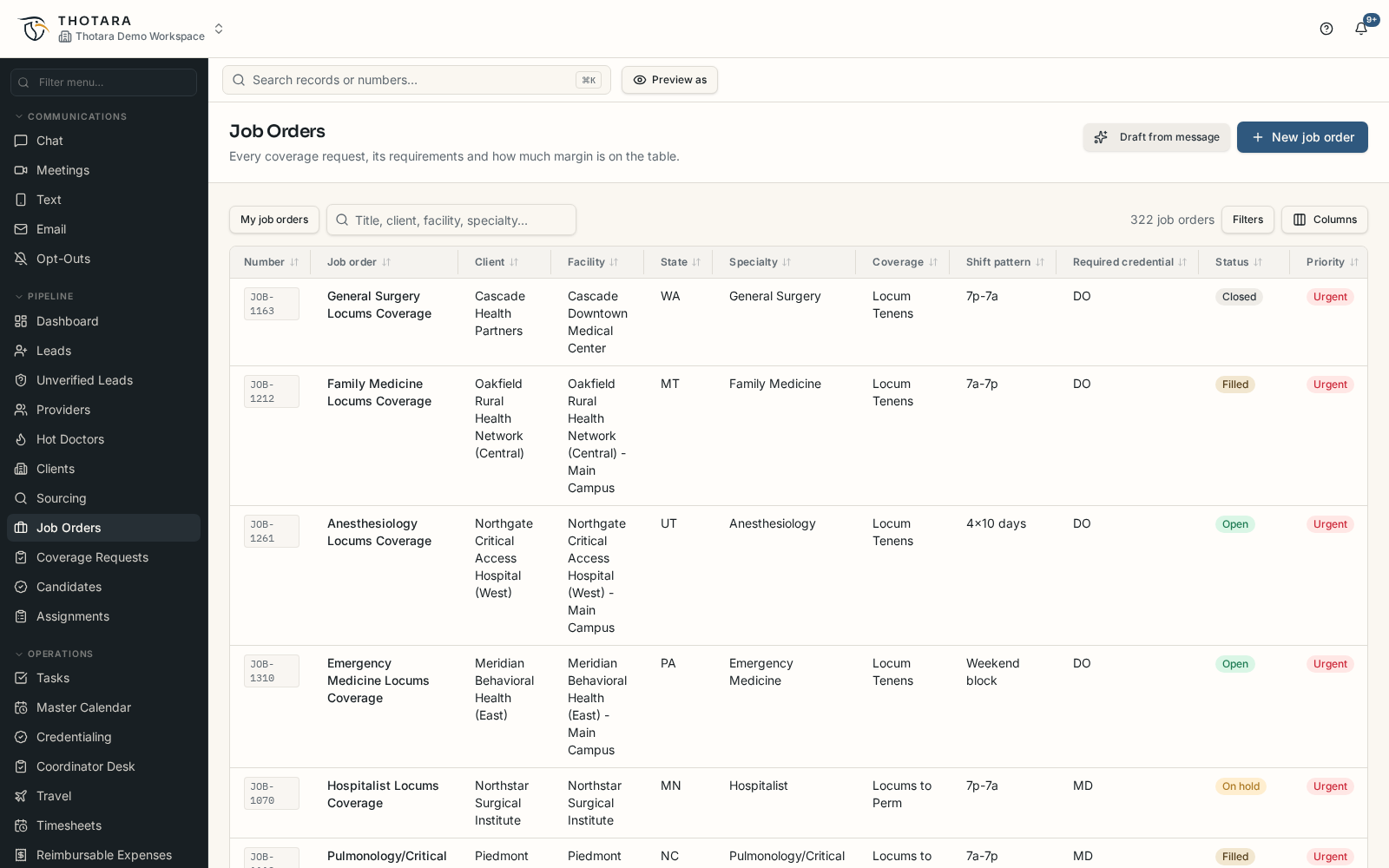
Job orders
Every coverage request and its margin
Each order carries its client, facility, specialty, shift pattern, required credential, status and priority — with AI-drafted orders from incoming messages and a ranked shortlist a click away.
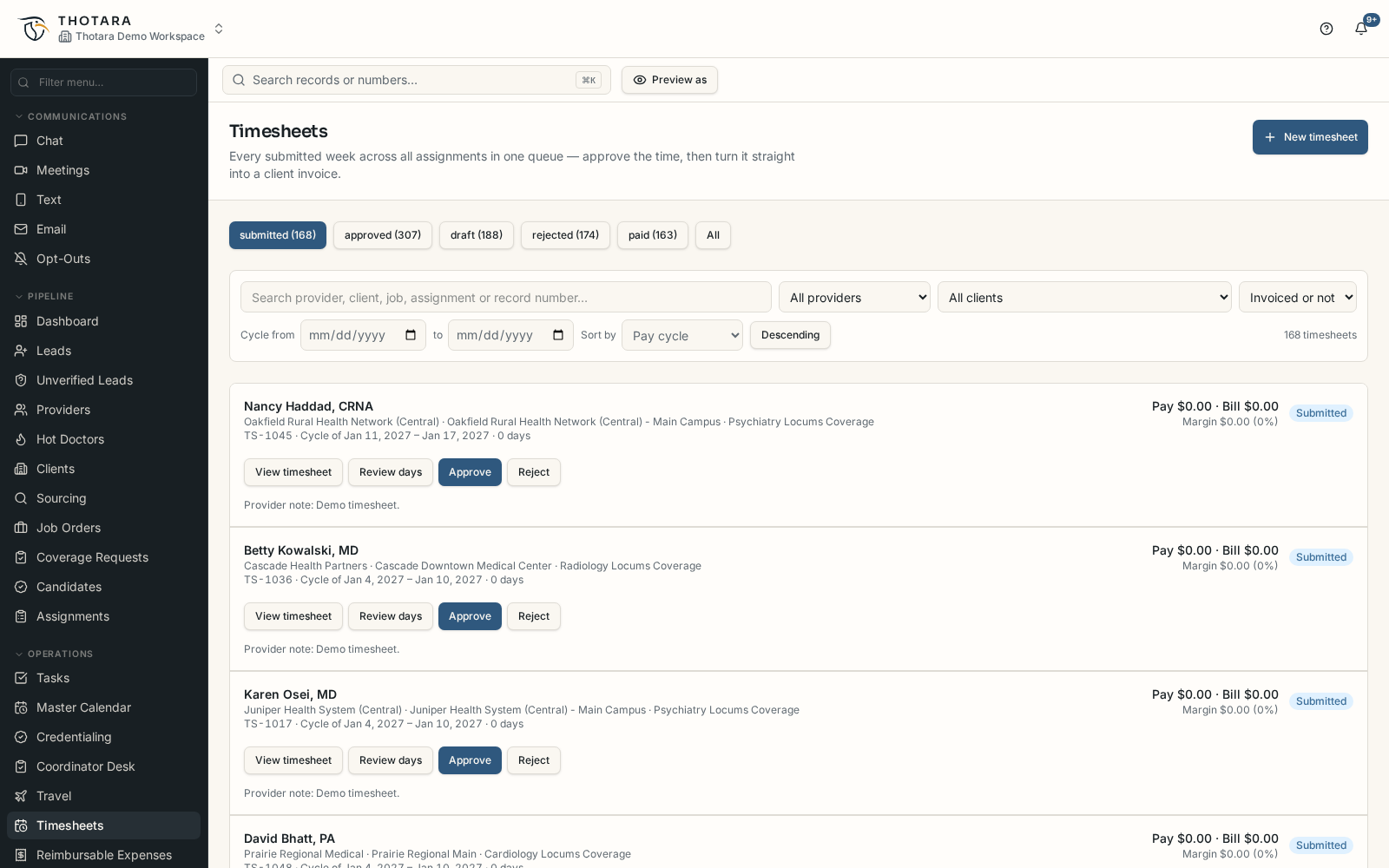
Timesheets
Approve the week, invoice the client
Every submitted week across all assignments in one queue — search any provider, client, job or record number, approve or reject, and turn approved time straight into a client invoice with pay-vs-bill margin on every row.
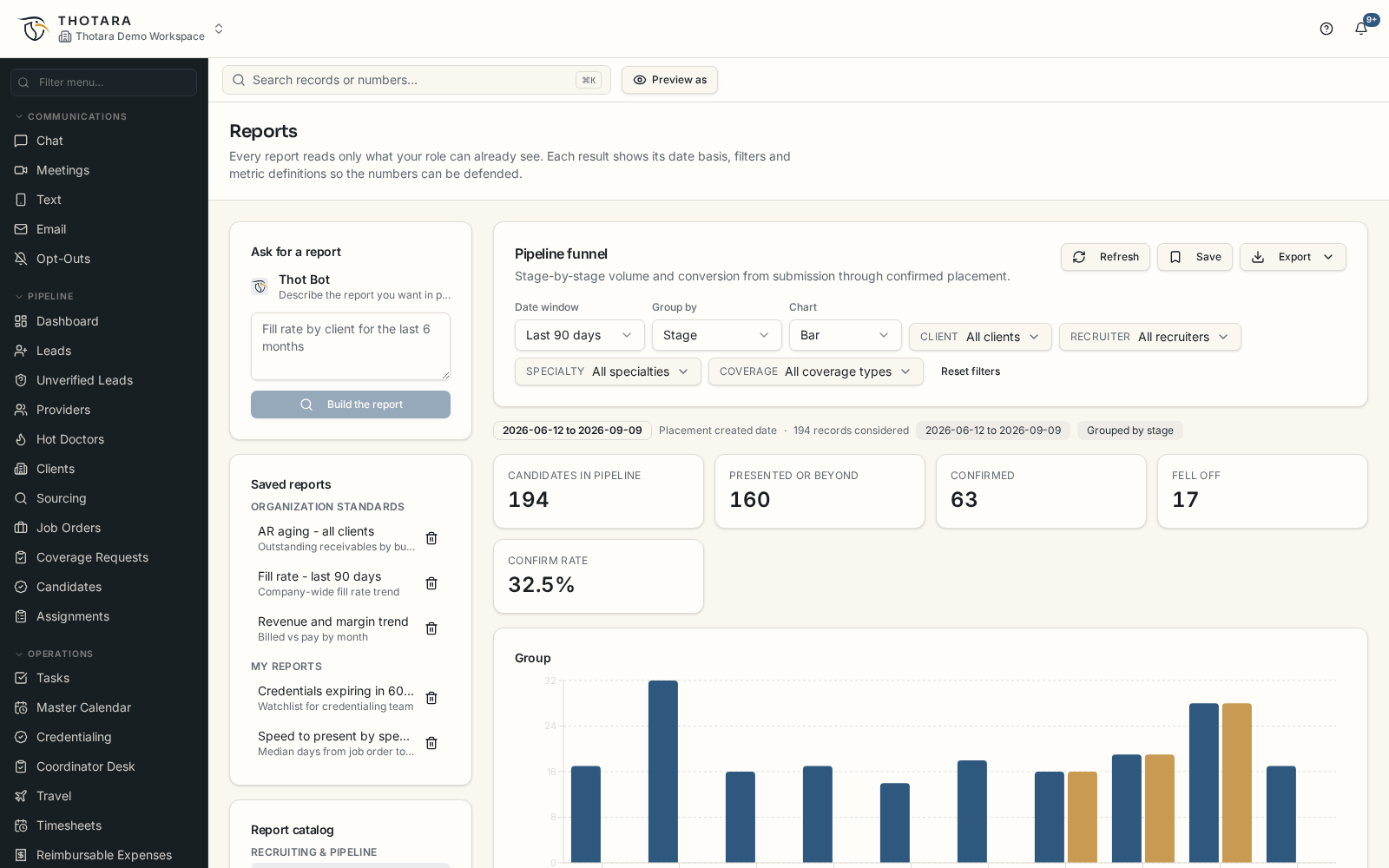
Reporting
Numbers you can defend
Pipeline funnel, fill rate, time to fill, speed to present and margin trend — every report shows its date basis, filters and metric definitions. Or just ask Thot Bot for the report you want in plain language.


How the work moves
From coverage request to confirmed provider, faster
- 01
Order lands, shortlist appears
Thotara ranks your entire book against the request in seconds — licensure feasibility, specialty, availability, rate fit and site history, each with its rationale.
- 02
Present and clear faster
Presentations, name clears and client responses are tracked with the stall flagged the day it happens instead of the week it's noticed.
- 03
Credential in parallel
Checklist items, document requests and packet assembly start the moment a provider advances, not after the offer.
- 04
Cover, bill, learn
Shifts, travel and timesheets flow into pay-vs-bill invoicing — and every outcome sharpens the next match.
Where we differ
Three things a configured CRM never gives you
Locums firms lose placements to slow shortlists, invisible stalls and credentialing surprises. Those are the three problems Thotara was built to remove.
AI aimed at time-to-fill
Not a chat window on the side. Ranking, fill probability, bottleneck detection, fall-off risk and prioritized actions — pointed at the metric that decides whether the desk grows.
Decisions, not dashboards
Insight arrives where the work happens: on the order, on the provider, in the recruiter's queue — with the reasoning attached and a human making the call.
Portals included
A provider portal and a facility portal ship with the platform, protected by the same encryption, MFA and permission controls as your internal desk.